 Skip to content

The ultimate casual staple. Whether you're looking for sun-ready straw, clean everyday cotton, or textured corduroy, our bucket hats combine effortless comfort with a modern, relaxed silhouette.
-
Louisiana Washed Cotton Fisherman Bucket Hat
Regular price €22.90 EURRegular priceUnit price per€28.90 EURSale price €22.90 EURSale -
Waterproof Leather Bucket Hat
Regular price €18.90 EURRegular priceUnit price per€23.90 EURSale price €18.90 EURSale -
Reversible Plain Bucket Hat
Regular price €18.90 EURRegular priceUnit price per€18.90 EURSale price €18.90 EUR -
Travellers Hiking Sun Bucket Hat
Regular price €24.90 EURRegular priceUnit price per€32.90 EURSale price €24.90 EURSale -
Waterproof Leather Reversible Bucket Hat
Regular price €18.90 EURRegular priceUnit price per€24.90 EURSale price €18.90 EURSale -
OffShore Wide Brimmed Bucket Hat
Regular price €28.90 EURRegular priceUnit price per€28.90 EURSale price €28.90 EUR -
Indiana Washed Cotton Fisherman Bucket Hat
Regular price €24.90 EURRegular priceUnit price per€32.90 EURSale price €24.90 EURSale -
Retro Washed Cotton Bucket Hat
Regular price €19.90 EURSale price €19.90 EURUnit price per -
Winter Plain Fur Bucket Hat
Regular price €23.90 EURRegular priceUnit price per€23.90 EURSale price €23.90 EUR -
2026 Football World Cup Country Flags Bucket Hat
Regular price €19.90 EURRegular priceUnit price per€24.90 EURSale price €19.90 EURSale -
GLTR Explorer Vintage Bucket Hat
Regular price €22.90 EURRegular priceUnit price per€29.90 EURSale price €22.90 EURSale -
Autumn Plain Corduroy Bucket Hat
Regular price €19.90 EURRegular priceUnit price per€25.90 EURSale price €19.90 EURSale -
Chilli Peppers Bucket Hat
Regular price €19.90 EURRegular priceUnit price per€23.90 EURSale price €19.90 EURSale -
Plain Washed Denim Bucket Hat
Regular price €19.90 EURRegular priceUnit price per€19.90 EURSale price €19.90 EUR -
Corduroy Lamb Fur Bucket Hat
Regular price €19.90 EURRegular priceUnit price per€24.90 EURSale price €19.90 EURSale -
Travellers Tornado F-14 Sun Bucket hat
Regular price €24.90 EURRegular priceUnit price per€24.90 EURSale price €24.90 EUR -
Leopard Print Fur Bucket Hat
Regular price €22.90 EURRegular priceUnit price per€28.90 EURSale price €22.90 EURSale -
JM Cartoons Cotton Bucket Hat
Regular price €19.90 EURRegular priceUnit price per€19.90 EURSale price €19.90 EUR -
Colorado Sun Bucket Hat
Regular price €28.90 EURRegular priceUnit price per€28.90 EURSale price €28.90 EUR -
Sun Shade Bucket Hat
Regular price €23.90 EURRegular priceUnit price per€23.90 EURSale price €23.90 EUR -
Let's Wonder Explorer Bucket Hat
Regular price €21.90 EURRegular priceUnit price per€28.90 EURSale price €21.90 EURSale -
Camouflage Wide Brimmed Bucket Hat
Regular price €28.90 EURRegular priceUnit price per€27.90 EURSale price €28.90 EUR -
Smile Reversible Bucket Hat
Regular price €19.80 EURRegular priceUnit price per€19.80 EURSale price €19.80 EUR -
Cow Print Fur Bucket Hat
Regular price €19.90 EURRegular priceUnit price per€24.90 EURSale price €19.90 EURSale


Caps Collections
View all-

Baseball Caps
Premium Baseball Caps with impeccable finishes and a perfect fit. Created for...
-

Newsboy Caps
Elevate your outfit with a classy newsboy cap. The best newsies on...
-

Snapback Caps
Discover the best Snapbacks Caps selection on Ghelter! (Up to 60% Discount)...
-

Docker Caps
Discover the best selection of Docker Caps in Ghelter (Up to 60%...


Hats Collections
View all-

Fedora Hats
Discover the best selection of Fedora Hats in Ghelter! (Up to 60%...
-

Trilby Hats
Discover the best selection of Trilby Hats in Ghelter! (Up to 60%...
-
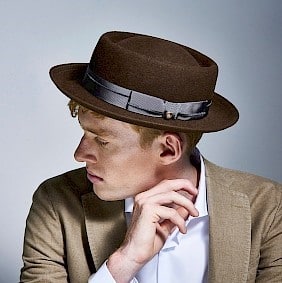
Porkpie Hats
+100000 Satisfied Customers! Find your Porkpie Hat in Ghelter, huge selection of...
-

Bucket Hats
Buy your Bucket Hat in Ghelter! Huge selection of styles, colors &...
-

Cowboy Hats
Cowboy hats and western hats for men in wool, straw, cotton and...


Frequently asked questions about bucket hats
What is the difference between a bucket hat and a fisherman hat?
They are the same hat: a soft, flat-topped crown with a brim that slopes down all the way round. Fisherman hat is one of its original names, alongside Irish country hat, and the shape came out of Irish country wear around 1900, made in wool felt or tweed so it could be crushed into a pocket. Anglers took to it because the all-round brim kept rain and sun off without blocking the view.
If the two words point at anything different today, it is trim rather than pattern.
A hat sold as a fisherman hat is more likely to be plain, in a muted color, sometimes with mesh vents or a chin cord, while bucket hat has become the term for the printed and streetwear versions. Ghelter lists both under bucket hats: pick the plain ones if you want the original look and the printed ones if you want the streetwear one.
How should a unisex bucket hat fit?
A bucket hat should sit level with the brim just above your eyebrows, snug enough not to lift in wind but loose enough to leave no line on your forehead. The crown is soft and unstructured, so unlike a stiff hat the fit is decided entirely by where the band meets your head, and a little slack at the top is normal. If it perches high on your head, the size is too small: this is a hat that is meant to come down.
To find your size, run a soft tape measure around the widest part of your head, just above the ears and across the middle of the forehead, keeping the tape level, and use the larger of two readings.
Ghelter lists bucket hats by head measurement in centimeters, with a good number sold as an adjustable or elastic span, and the kids' models sized by age as well as measurement.
Are bucket hats effective for sun protection?
The shape helps more than a cap does, because the brim goes all the way round and shades your ears and the back of your neck, which is where a peaked cap leaves you exposed.
Dermatology guidance puts the difference in numbers: a three-inch brim cuts most of the UV reaching the back of the neck, while a cap's peak shades the front and nothing else. Two things decide how much you actually get: how wide the brim is, and how tightly the fabric is woven. Hold the fabric up to a light, and the more you see through it, the more gets through to your skin. Treat a bucket hat as shade rather than as rated sun protection, because none of the hats in Ghelter's bucket hat collection carries a certified UPF figure. For the most shade in this range, go for a wide brim, and our guide to hats that shade best compares the shapes.
How do I style a fashion bucket hat for streetwear and casual outfits?
Match the hat to the weight of the outfit: a plain cotton bucket hat sits under anything, and a printed or textured one wants everything else kept simple. With denim, a hoodie, a tee or an overshirt it needs no thought. With tailoring it fights, which is the one place the shape does not go.
Wear it flat and low rather than perched. Corduroy, denim and heavier cottons carry it into fall, and the printed and bright versions belong to summer and to festivals.
Ghelter has outfit ideas in our piece on wearing the shape day to day, and a separate one on festival styling.
What is the best way to wash and care for a bucket hat?
Wash a cotton or denim bucket hat by hand in cool water with a mild detergent, and never wring it. The crown is soft but the brim usually has a stiffener sewn inside, and heat and spinning are what warp it. A machine cycle is a risk even on a gentle setting, and a tumble dryer will curl the brim permanently.
Dry it on something round. Reshape the brim by hand while the hat is damp, sit it over an upturned bowl or a folded towel so the crown keeps its volume, and leave it away from radiators and direct sun. Straw versions get a barely damp cloth and never a soak, and leather ones a conditioner made for genuine leather only, with a damp cloth alone on vegan leather.
Ghelter lists the material on every product page, so check it first, and our cleaning guide covers felt, cotton, straw and wool step by step.